Is Your Social Puppy The Problem?
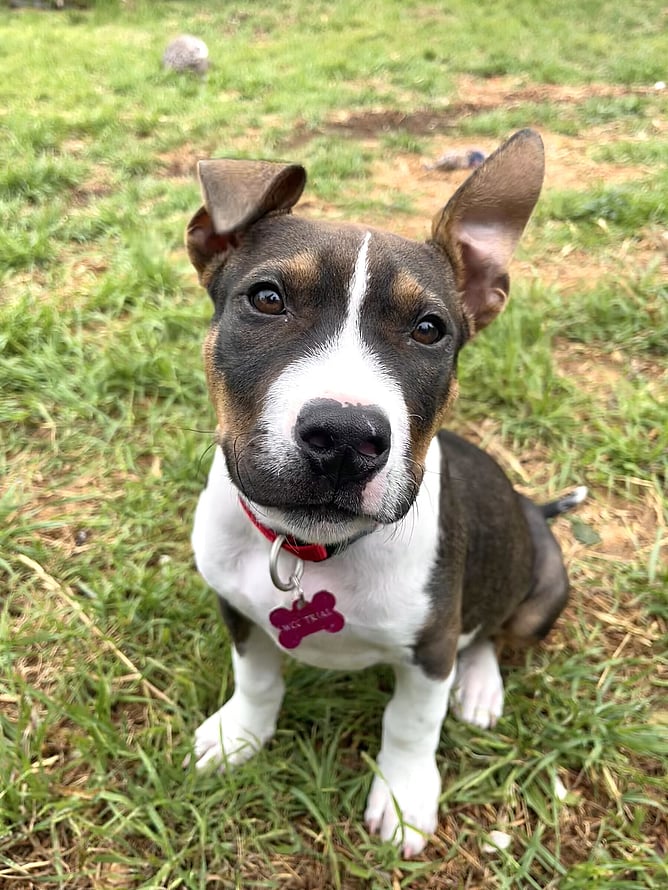
If you have a puppy who loves everyone and everything, this might surprise you:
Your very friendly puppy could be the problem.
I know, I know! But she/he's friendly, I can hear you saying!
This article is said with love for owners of overly social puppies who:
Drag them down the street to say hi to every dog
Assume friendliness = good social skills
Feel embarrassed when your puppy ignores them around other dogs, because they're having so much fun!
Think “it’s fine, they’re just friendly”
Have a puppy who barks, whines or just won't move when they see another dog
Let’s unpack why this behaviour can cause issues you may not be prepared for, and what you can be doing instead.
Friendly vs Socially Skilled: Not the Same Thing
A puppy who wants to greet every dog is socially motivated, not socially skilled.
True dog social skills include:
Reading other dogs body language
Respecting boundaries
Ignoring other dogs sometimes
Being able to stay reasonably calm around other dogs
A puppy who barrels in face‑first, ignores warning signals, and cannot disengage is not being polite. Even if their intentions are friendly and they just want to play.
From another dog’s perspective, this coming in hot, is rude, overwhelming or threatening.
So, what not to do...
Why You Shouldn’t Let Your Puppy Pull You To Say Hi To Other Dogs
Allowing your puppy to pull towards other dogs teaches several things (none of them helpful.)
1. It Rewards Pulling on the Lead
If pulling gets them access to what they want, pulling works.
This creates:
Chronic lead pulling
Frustration when they can’t get to dogs
Explosive reactions like barking and lunging as they get older and stronger
Many adult dogs labelled “reactive” started out as over‑friendly puppies who were allowed to rehearse this pattern.
2. It Teaches Your Puppy That Other Dogs Matter More Than You
Every time your puppy ignores you to drag towards another dog, they’re learning:
“Dogs are more important than my human.”
This makes:
Coming when called harder
Focus harder
Enjoying adventures and cafe outings very challenging
Other dogs shouldn't be the main source of fun and entertainment when you go out with your dog. You want your dog to actually enjoying hanging out with you too right?
3. It's An Unnatural Way To Greet For Dogs
When a puppy is pulling straight into another dog’s space, the other dog gets no choice in if they want to say hi.
One second they're walking along minding their business, the next they have an exuberant puppy in their face.
Choice is a huge part of healthy dog communication.
Forced greetings often escalate because:
One or both dogs feel trapped
Normal social cues are rushed or missed
There’s no space to move away
The Risk of Your Puppy Not Reading Other Dogs’ Body Language
Dogs communicate constantly - but puppies aren’t born fluent.
If your puppy is allowed to overwhelm other dogs, they may:
Ignore freezing, lip lifting, turning away, or whale eye
Miss early warning signals when a dog is over their puppy bullshit
Learn only when a dog finally snaps
This is risky because:
One or several bad interactions can create fear or reactivity
Your puppy may get injured, not all dogs are very tolerant
Your puppy may learn that escalation is normal
Well‑socialised dogs don’t need to be told off - they listen long before it gets to that point.
Why “They’ll Learn When Another Dog Tells Them Off” Is Bad Advice
This approach relies on:
A stranger's dog having perfect communication skills
That dog being tolerant
No one getting hurt
That’s a big gamble.
Learning through repeated negative interactions doesn’t build social intelligence, it creates uncertainty
Your job is to protect your puppy and other dogs from bad experiences.
Ok, so what do I do with my very friendly puppy then?
What You Should Be Doing Instead
1. Teach Calmness Around Other Dogs
The goal is not excitement - it’s indifference.
Your puppy should be able to:
See another dog
Stay on a loose lead
Check in with you
Move on
Neutral dogs are safer, more welcome, and easier to live with.
Now, we're not saying never let your puppy meet other dogs. But that they don't need to say hi to EVERY dog. Read the room.
2. Reward Looking To You
Every time your puppy chooses you over another dog, give them feedback, reward them. Show them why it's worthwhile paying attention to their human.
This might look like:
Saying YES and rewarding eye contact
Treating for staying beside you as a dog passes you
Creating distance before they tip over to crazy town
You’re building the habit of checking in instead of checking out.
3. Be Selective With Dog Interactions
Quality matters more than quantity.
Choose:
Calm, well‑mannered adult dogs
Dogs who communicate clearly and fairly
Short, positive interactions
This is where having a community of like minded dog parents comes in so handy. You can find like minded dog parents through our Dog Training App.
I can't tell you how many times my own dogs have helped my 1:1 Dog Training clients learn through their good example.
Avoid chaotic on‑lead greetings
You know the ones where you and the other owner are acting out dancing around a maypole as you both getting tangled in each others leads. You do the awkward dance of swapping hands through the lead, you duck under, whilst they go over. No, none of that is helpful to your dog.
4. Teach Your Puppy How to Disengage
One of the most important life skills for a dog is knowing how to look and walk away.
Practise:
Calling your puppy away from dogs
Rewarding turning back to you
Ending interactions before they get silly
Leaving calmly is a skill! Teach it early!!!!!
The Puppy You Have Now Is the Adult Dog You’re Training
Over‑friendly puppies without guidance, they often become:
Frustrated greeters
Bark and Lunge at dogs across the road
Dogs who struggle to cope on your daily walks
With some forethought, clear goals, and intentional training, that same puppy can become:
Socially savvy
Calm and appropriate around other dogs
Focused and listening to you
A friendly dog reads the room, ignores things when it's none of their business and is an easy dog to include in as much of your life as you want.
Your Canine Compass help dogs and their owners in Wellington and online. Teaching easily distracted dogs how to listen and respond, even when they are very excited.
How can we support you and your loveable friendly puppy today?