Dog Training in Wellington: Why Your Dog Does What They Do (Especially The Naughty Bits)
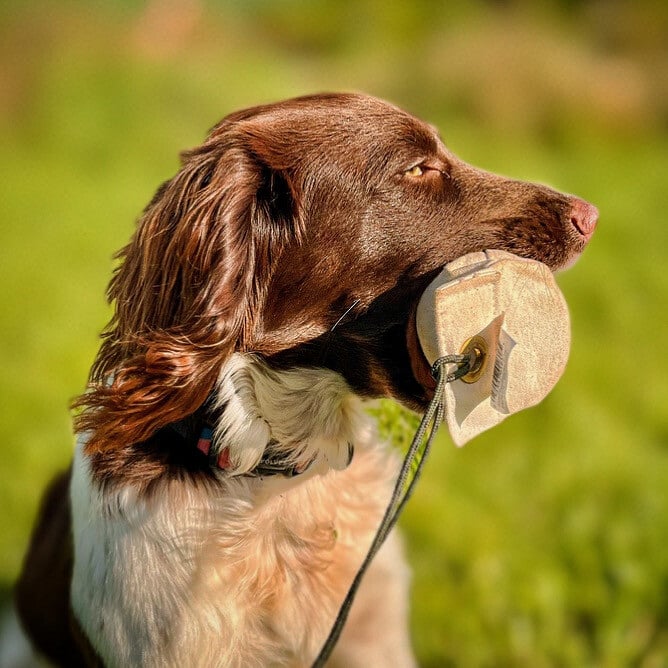
On the weekend I took my springer spaniel out working on a pheasant shoot.
He was in his element.
Running through kale crops.
Diving into bushes.
Flushing birds.
Retrieving.
Completely lit up.
Watching him out do what he loves, always makes me happy.
But this wasn’t something I taught him, not exactly.
I moulded and refined what was already in him.
And that’s something I see all the time with my dog training clients in Wellington.
Most of the time, your dog's natural instincts show up in ways that feel frustrating for our daily life.
The dog that won’t stop sniffing on walks.
The one disappearing into bushes on the town belt.
The one chasing birds at the beach.
The dog that ignores when you call when something more exciting appears.
It can feel like your dog isn’t listening.
Like they’re distracted.
Like they’re choosing everything else over you.
Your dog isn’t intentionally trying to piss you off.
They’re doing exactly what they were bred to do, what feels right to them.
When you understand your dog’s breed or breed mix, their behaviour starts to make sense.
That spaniel glued to the ground with their nose and bashing about in the bushes?
They were bred for hunting and scenting.
That border collie obsessed with movement?
They were bred for chasing, herding and controlling stock.
That bully breed that goes from dead asleep on the couch to jumping all over you and around the room when someone dares walk their dog past your house?
They were bred to go from 0-100 in a flash!
This is a huge part of what I focus on in my 1:1 dog training in Wellington.
Because when you don’t understand these instincts, it’s easy to feel like your dog needs more obedience.
More control.
More correction.
But in reality?
Most high-energy dogs don’t need to sit and stay in those moments. They don't need more obedience.
They need better opportunities to fulfil their instincts.
For my dog, working on a pheasant shoot only happens a few months of the year.
The rest of the time, I don’t expect that part of him to disappear.
I build it into our everyday training and walks.
That looks like:
Hiding a ball in long grass for him to hunt out
Throwing a toy for him to retrieve
Practising structured retrieve games
Letting him watch where something lands before sending him to go get it
This is the kind of real-world dog training that makes a difference.
Same instincts.
Just channelled in a way that works for both of us.
And you can do the same - yep even in Wellington.
You don’t need a rural property or access to a farm.
You need to understand the job your dog thinks they have and bring elements of that into your daily walks.
If you do one thing after reading this, make it this:
Go to YouTube.
Search your dog’s breed (or closest mix).
Watch them working.
Not just casually, really watch.
What are they doing with their body?
Where is the dog's focus?
How are they moving through the environment?
This is one of the simplest ways to start to understand your dog’s behaviour.
And for most owners, this is where things click. You watch and say to yourself "ahhhhh yep that's what my dog does"
From there, ask yourself:
“How can I give my dog an outlet for this on our walks?”
If you’re walking around Wellington, that might look like:
Using all our wonderful green for scent games
Practising retrieve games at our dog friendly beaches like Lyall Bay or Petone
Bringing a toy for your dog on your walks
Adding short training games into your walks
When you give your dog an outlet for their instincts:
They become easier to train.
They settle more at home.
They listen better outdoors.
And your walks feel less chaotic.
If you’re struggling with things like:
your dog not coming when called
pulling on the lead
getting overly excited or distracted
ignoring you around other dogs
I know it's not a lack of you trying to train your dog.
It’s a lack of the right kind of training.
That is exactly why Your Canine Compass offers dog training in Wellington that works in the real world, not just at home.
If you’re based in Wellington and this is hitting home…
And you’re thinking:
“This makes so much sense… but I don’t know how to apply it to my dog”
That’s exactly what I help with.
I work with dog owners 1:1 in Wellington to:
improve recall (even around distractions)
create calm, enjoyable walks
help high-energy dogs focus and listen
build real-life skills that actually hold up outside
If you want support with your dog, you can book in a free call and we’ll chat through what’s going on and what next steps would look like
Your dog isn’t trying to make your life harder, even though it really does feel like it some days!
They’re following a blueprint that’s already inside them.
Once you understand it…
Everything starts to make a lot more sense.
But you also start to find your way to hack the system and both enjoy your dog walk!
What was your dog's breed bred to do originally?